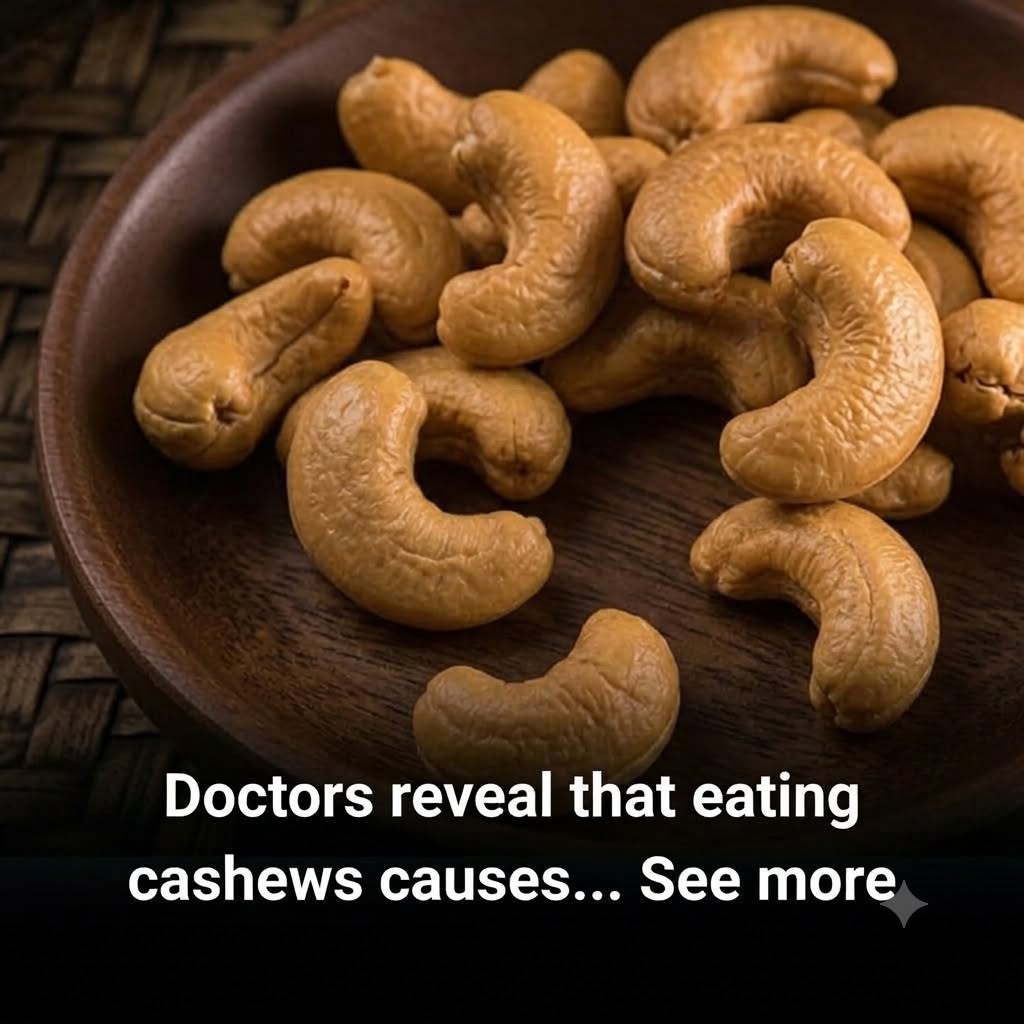
Doctors Reveal What Really Happens When You Eat Cashews
Cashews are creamy, delicious, and packed with nutrients. But you may have seen headlines claiming that eating cashews “causes” certain health problems. So what’s the truth?
Medical experts say cashews can be very healthy for most people — but like any food, they can also cause issues in specific situations. Here’s what you should know about their potential benefits and risks.
🥜 1. Cashews May Support Heart Health
Cashews are rich in:
- Monounsaturated and polyunsaturated fats
- Magnesium
- Copper
- Plant-based protein
Nuts such as cashews can be part of a heart-healthy eating pattern. Replacing foods high in saturated fats or refined carbohydrates with nuts may help support healthier cholesterol levels and overall cardiovascular health.
What this means: Eating a moderate portion of unsalted cashews can be a nutritious choice for most people.
🍬 2. Cashews May Help Support Blood Sugar Control
Cashews contain a combination of protein, healthy fats, and some fiber. These nutrients can make a meal more satisfying and may help slow digestion compared with foods dominated by refined carbohydrates.
For people managing blood sugar, nuts can be a useful alternative to highly processed snacks or sweets.
However, portion size matters. Cashews are calorie-dense, so regularly eating large amounts can contribute to excess calorie intake and unwanted weight gain.
⚠️ 3. Cashews Can Cause Serious Allergic Reactions
For some people, cashews are not simply a snack — they can be dangerous.
Cashews are tree nuts, and tree-nut allergies can cause reactions ranging from mild symptoms to life-threatening anaphylaxis.
Possible symptoms include:
- Hives or itching
- Swelling of the lips, tongue, or throat
- Vomiting or stomach discomfort
- Difficulty breathing
- Dizziness or loss of consciousness
- Anaphylaxis
If you have a known cashew or tree-nut allergy, avoid cashews and follow the emergency plan provided by your healthcare professional.
There’s more to discover. Continue to the next page for the rest of this article.