
What About Crowns, Veneers, and Fillings?
Here’s another important detail.
Whitening treatments work on natural tooth structure, not tooth-colored restorations.
The ADA notes that whitening doesn’t whiten tooth-colored restorations.
So if you have veneers, crowns, bonding, or tooth-colored fillings, whitening your natural teeth may make the difference between the natural teeth and restorations more noticeable.
That’s something to discuss with your dentist before whitening.
Turmeric and Oral Health: What Does the Research Actually Say?
This is where the story gets interesting.
Curcumin has been investigated for several oral-health applications because of its biological properties. Recent reviews describe research into its anti-inflammatory and antimicrobial effects and potential uses in conditions involving the gums and oral tissues.
There have also been clinical studies of curcumin-containing mouthwashes for plaque and gingivitis.
However, the evidence isn’t the same thing as proving that rubbing kitchen turmeric powder onto your teeth will whiten them.
A systematic review of curcumin mouthwash studies found promising effects but also noted important limitations in the available research, including study-quality concerns and the need for better trials.
So I’d put turmeric in the “interesting ingredient with promising oral-health research” category—not the “proven natural tooth bleach” category.
What Actually Works Better for Whitening?
If you’re looking for measurable whitening rather than simply cleaner-looking teeth, there are better-studied options.
Whitening Toothpaste
Whitening toothpastes can help remove surface stains through abrasives, and some formulations also contain ingredients that contribute to whitening.
Whitening Strips
Many over-the-counter whitening strips use peroxide to lighten tooth color.
Dentist-Supervised Whitening
Dentists can provide customized whitening approaches and evaluate whether discoloration is caused by surface staining, intrinsic changes, decay, restorations, or another issue.
The ADA identifies peroxide-based carbamide peroxide and hydrogen peroxide as common bleaching agents in professional and over-the-counter whitening treatments.
Natural Ways to Keep Teeth Looking Brighter
Sometimes the best whitening strategy isn’t another homemade paste.
It’s preventing new stains in the first place!
Brush Regularly
Use fluoride toothpaste and a soft toothbrush.
Clean Between Your Teeth
Floss or use another dentist-recommended interdental cleaning method.
Rinse After Staining Drinks
After coffee, tea, or other strongly pigmented drinks, rinsing with water can be a simple way to reduce lingering residue.
Don’t Smoke or Use Tobacco
Tobacco is a major contributor to tooth discoloration and also poses significant oral-health risks.
Keep Regular Dental Appointments
Professional cleanings can remove deposits and stains that home brushing can’t always handle.
Frequently Asked Questions
Does turmeric really whiten teeth?
There isn’t strong evidence that turmeric powder itself bleaches teeth. Curcumin is being studied for several oral-health applications, but its potential antimicrobial and anti-inflammatory properties shouldn’t be confused with proven tooth bleaching.
Can baking soda whiten yellow teeth?
Baking soda may help remove some surface staining, which can make teeth look cleaner and brighter. It does not reliably change the natural internal color of the tooth.
Can I leave the turmeric paste on overnight?
No. There’s no established benefit to leaving a homemade turmeric-and-baking-soda mixture on your teeth overnight, and prolonged exposure isn’t necessary.
Will turmeric permanently stain my teeth?
Turmeric is highly pigmented, so residue can temporarily make things look yellow. Thorough rinsing and normal oral hygiene should remove residue. But don’t assume every discoloration is turmeric—persistent changes should be evaluated by a dentist.
Can I use this instead of toothpaste?
No.
A homemade turmeric-and-baking-soda paste doesn’t replace fluoride toothpaste or a complete oral-hygiene routine.
How quickly will I see results?
If it helps at all, the most realistic result is a cleaner appearance from removal of superficial debris or staining.
Claims that this combination can dramatically whiten teeth in exactly two minutes aren’t supported by strong clinical evidence.
Is professional whitening safer?
Professional and reputable over-the-counter whitening products are formulated and tested for their intended use. A dentist can also check for cavities, gum disease, enamel problems, and other issues before whitening.
Sensitivity and gum irritation can occur with legitimate whitening treatments, which is another reason to follow product directions rather than improvising.
Does baking soda damage enamel?
Baking soda itself is widely used as an abrasive ingredient in oral-care products, but how a substance is used matters. Aggressive brushing, excessive abrasion, or homemade mixtures with additional abrasive ingredients are not something I’d recommend.
Gentle technique matters just as much as the ingredient.
The Bottom Line
There’s something wonderfully appealing about opening the kitchen cupboard and finding a possible beauty remedy sitting right there.
But when it comes to your teeth, gentle and realistic beats dramatic every single time.
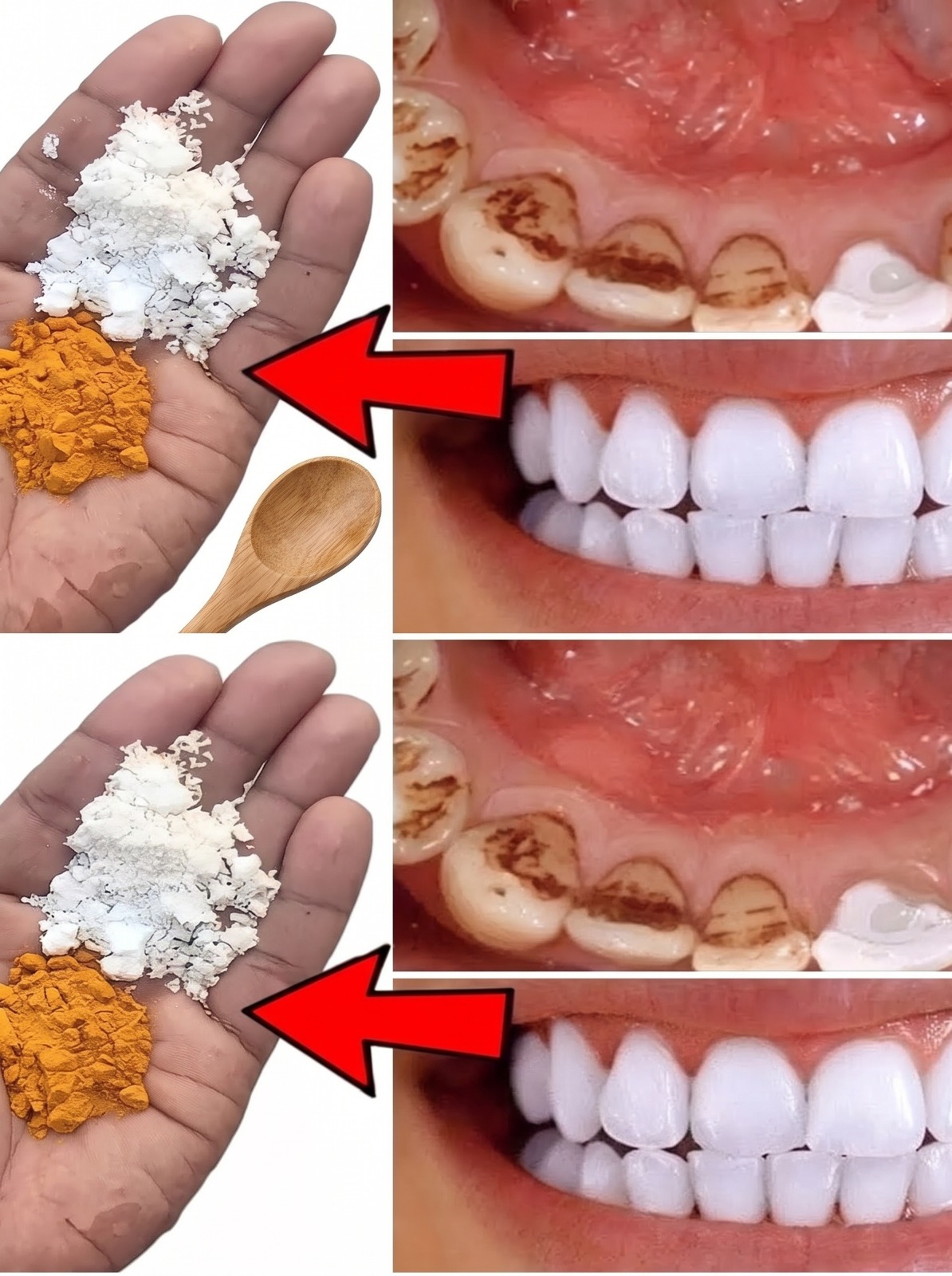
A tiny amount of baking soda may help polish away some surface stains, while turmeric contains curcumin with interesting properties that researchers continue to investigate in oral health. But there isn’t strong evidence that a homemade turmeric-and-baking-soda paste dramatically whitens teeth in two minutes.
And honestly?
You don’t need a miracle recipe.
For a healthy smile, focus on fluoride toothpaste, gentle brushing, cleaning between your teeth, regular dental care, and sensible stain prevention. If you want a noticeably whiter smile, evidence-based whitening products or dentist-supervised treatment are much more predictable choices.
Your smile deserves something better than an internet promise that sounds too good to be true.
And if you do decide to experiment with this simple home remedy, keep it gentle, keep expectations realistic, and don’t let a DIY whitening trick replace the basics of good dental care.
Have You Tried a Natural Teeth-Whitening Remedy?
I’d love to hear about your experience!
Did you try baking soda? Turmeric? A whitening toothpaste? Something completely different?
Leave a comment with what you noticed—and if you found this guide helpful, share it with someone who has been wondering whether that bright yellow spice really belongs anywhere near their toothbrush!
Approximate nutrition: Not applicable in a meaningful dietary sense because the mixture is intended to be spit out rather than consumed.
There’s more to discover. Continue to the next page for the rest of this article.


