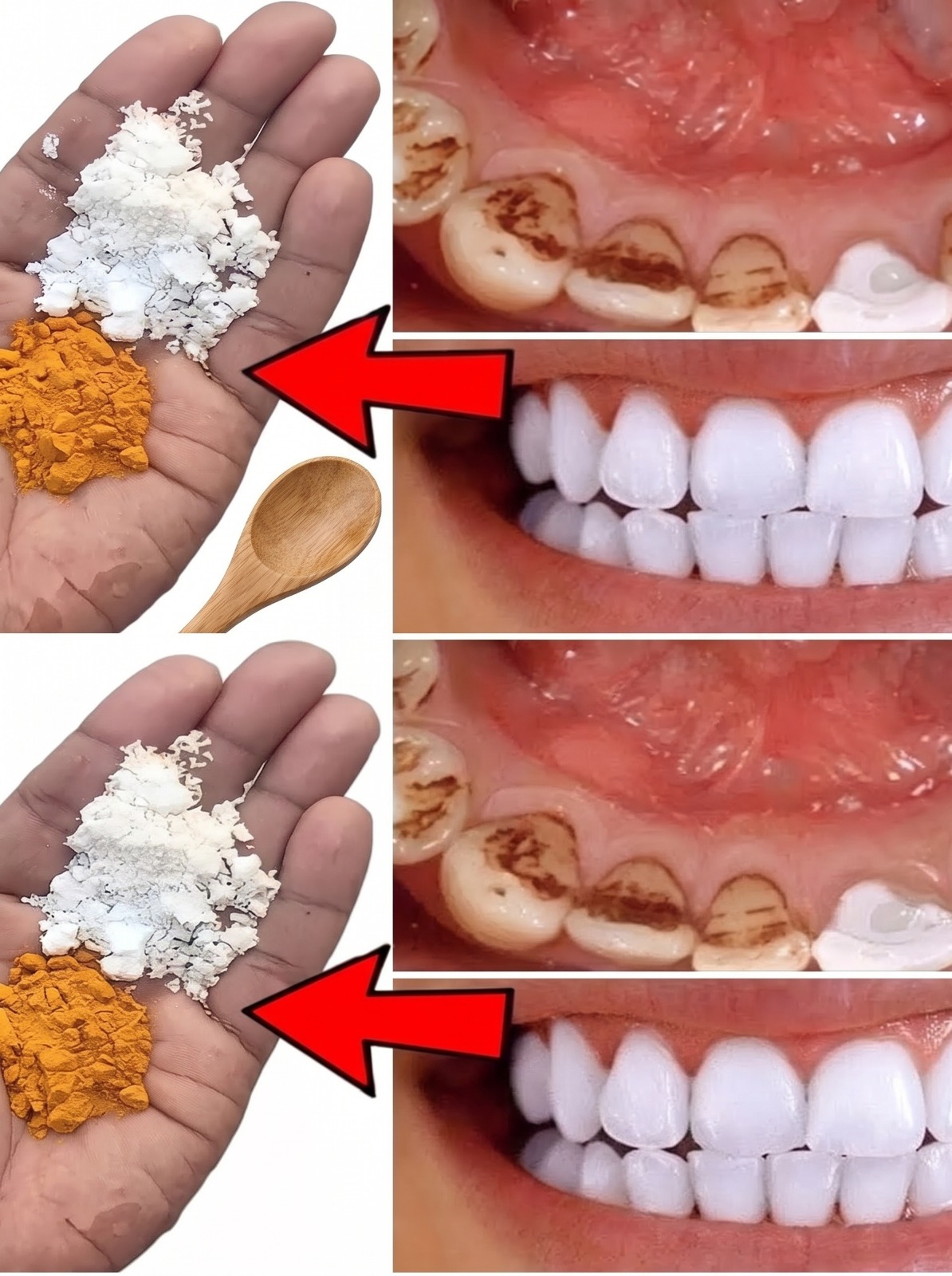
Step 1: Mix the Ingredients
Place the baking soda and tiny pinch of turmeric in a clean dish.
Add just a few drops of water.
Mix until you have a thin, smooth paste.
You want something that spreads easily—not something thick and gritty.
Step 2: Apply Very Gently
Using a soft toothbrush, apply a small amount to the teeth.
Use very light pressure.
Think polishing, not scrubbing.
There is no prize for brushing harder!
Step 3: Keep the Contact Brief
If you’re experimenting with this homemade paste, keep the application brief rather than leaving it sitting on your teeth.
There’s no good evidence that leaving turmeric and baking soda on your teeth for several minutes—or overnight—will produce better whitening.
Step 4: Rinse Thoroughly
Rinse your mouth well with water.
Take your time here, especially because turmeric can leave pigment behind.
Step 5: Return to Your Normal Oral-Care Routine
This is the most important part.
Your everyday oral-care routine should still center around fluoride toothpaste and regular brushing, along with cleaning between the teeth.
A DIY mixture should never replace your normal toothpaste or your dentist’s recommendations.
How Often Should You Use It?
This is where I would be conservative.
There isn’t an established, evidence-based schedule showing that homemade turmeric-and-baking-soda brushing safely whitens teeth when used repeatedly.
Because baking soda is abrasive, more frequent or more aggressive use isn’t automatically better.
If your goal is simply a brighter smile, a fluoride toothpaste designed for stain removal or an evidence-based whitening product is a more predictable option.
The ADA notes that whitening toothpastes can remove extrinsic surface stains, while peroxide-based whitening products can actually bleach tooth color.
What You Should NOT Add to This Remedy
This is where many DIY whitening recipes go off the rails.
You may see recipes recommending lemon juice, vinegar, hydrogen peroxide from the medicine cabinet, salt, charcoal, or other highly abrasive ingredients.
I wouldn’t pile ingredients together just because the internet says they’ll make the teeth whiter.
Skip Lemon Juice and Other Acids
Acidic substances can contribute to enamel erosion.
There’s no reason to turn a mild cleaning experiment into an unnecessarily harsh chemical treatment.
Don’t Add Table Salt for Extra Scrubbing
More abrasiveness isn’t better.
If the goal is stain removal, aggressive scrubbing can work against you.
Don’t Use Household Hydrogen Peroxide Randomly
Peroxide is used in professionally formulated and over-the-counter whitening products, but concentration, formulation, contact time, and application matter.
A bottle of household peroxide isn’t interchangeable with a properly formulated dental whitening product.
Don’t Add Activated Charcoal Just Because It’s Trendy
The ADA notes that evidence for charcoal-based whitening products remains insufficient to establish adequate whitening benefit and safety.
Will Turmeric Make Your Teeth Yellow?
This is probably the question everyone wants answered!
Using turmeric doesn’t mean your teeth will permanently turn yellow.
But turmeric is intensely pigmented, and it can certainly leave residue behind if you don’t rinse thoroughly.
That’s one reason I would use only a tiny amount.
And if you notice yellow residue around the gumline or between the teeth, stop and clean your mouth normally rather than repeatedly applying more paste.
The irony would be pretty funny if a supposed whitening treatment left you looking more yellow!
The Biggest Mistake: Scrubbing Too Hard
This deserves its own section because it’s easy to fall into the trap of thinking:
“If a little helps, more must help more.”
Not with teeth.
Tooth enamel is hard, but that doesn’t mean you should aggressively scrub it with abrasive powders.
The goal of stain removal is to clean the tooth surface—not wear away the surface.
If your toothbrush bristles are flattened after brushing, you’re probably using too much pressure.
A soft-bristled toothbrush and gentle technique are a much better approach.
Who Should Skip DIY Teeth Whitening?
Homemade whitening mixtures aren’t appropriate for everyone.
Talk with a dentist before experimenting if you have:
- Tooth pain
- Significant tooth sensitivity
- Bleeding or swollen gums
- Cavities
- Cracked or damaged teeth
- Gum recession
- Enamel erosion
- Dental restorations you’re concerned about
- Persistent discoloration affecting only one tooth
And if a tooth suddenly changes color—especially if it becomes gray, dark, or noticeably different from the surrounding teeth—that deserves a dental evaluation rather than a whitening experiment.
There’s more to discover. Continue to the next page for the rest of this article.