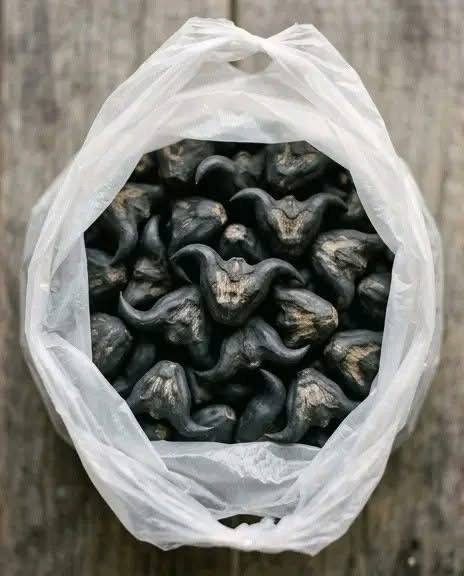
Discover the Mystery Food That Looks Like a Bat
What Are These Strange Bat-Shaped Foods?
The internet frequently buzzes with culinary mysteries. A perfect example is a bag of dark, horned items that can resemble little black bats, bull heads, or even unusual pods at first glance.
However, there is no need for alarm. These are natural aquatic foods commonly known as water caltrops, bat nuts, or bullhead nuts.
In this guide, we will explore what this fascinating food is, where it comes from, its nutritional characteristics, culinary uses, and practical ways to prepare it safely at home.
Understanding the Water Caltrop
To understand this unusual food, it helps to look at the botanical background of the plant.
Botanical Classification and Names
The water caltrop belongs to the genus Trapa. Commonly consumed species include Trapa natans and Trapa bicornis. Depending on the region, this unique food is known by several names:
- Water Caltrop: Named after the caltrop, an ancient pointed object, because of its distinctive shape and projections.
- Bat Nut: A nickname inspired by its resemblance to a bat with outspread wings.
- Bull Head Nut: A name reflecting its horn-like protrusions.
- Ling Kok / Ling Jiao: Traditional Chinese names for this seasonal food.
Growth and Cultivation
Unlike tree nuts such as walnuts or almonds, water caltrops grow in freshwater environments. They are native to parts of Eurasia and Africa and can grow in ponds, slow-moving waterways, and other suitable wetland environments.
The plant produces floating leaves arranged in a rosette pattern, while its roots remain anchored below the water. The edible fruits develop beneath the surface and are protected by a thick outer shell that becomes harder as the fruit matures.
The Seasonal Significance and Culture
For centuries, the water caltrop has held an important place in several Asian food traditions, particularly during the autumn season.
The Mid-Autumn Festival Connection
In Chinese culture, water caltrops are traditionally enjoyed during the Mid-Autumn Festival. The Chinese word associated with the caltrop, ling, has associations with cleverness and intelligence in the language and culture. For this reason, the food has sometimes been connected symbolically with hopes that children will grow up bright and successful.
A Limited Autumn Harvest
Fresh water caltrops are seasonal and may not be available year-round in every market. Depending on the variety and growing region, harvesting often takes place during the autumn months.
When fresh, the outer shell may range from greenish-purple to dark brown or nearly black. After harvesting and washing, the caltrops commonly have a dark, matte appearance.
The unusual shell may be what first catches your attention, but the real surprise is hidden inside.
There’s more to discover. Continue to the next page for the rest of this article.