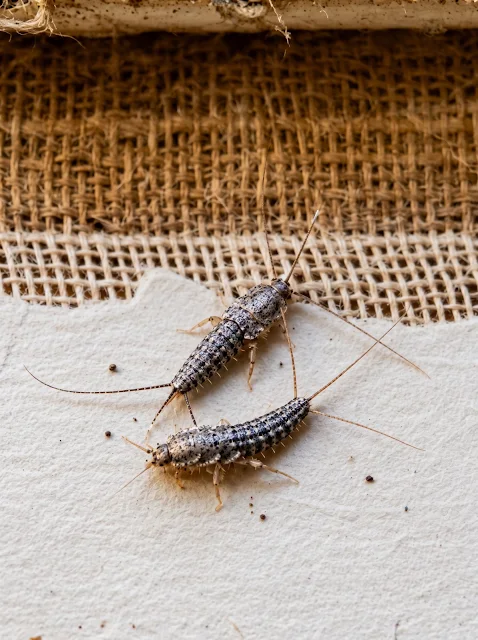
Bathrooms check almost every box on a silverfish’s wish list.
There’s water.
There’s humidity.
There are dark cracks and crevices.
And there are plenty of places to hide.
Showers and baths release moisture into the air, while leaks around sinks, tubs, toilets, or pipes can create persistent damp areas.
The EPA notes that showers and cooking can add moisture to indoor air, while plumbing leaks and water entering building cavities can also contribute to indoor moisture problems.
So if silverfish keep appearing around your bathroom, check for:
- Leaking faucets
- Dripping pipes
- Moisture underneath the sink
- Leaks around the toilet
- Water collecting around the bathtub
- Poor ventilation
- Persistent condensation
- Damp cabinets
- Gaps around plumbing
That tiny silver insect could be giving you a clue.
Do Silverfish Bite People?
This is one of the first things people wonder when they see them.
Silverfish aren’t known for biting people or pets.
They don’t behave like mosquitoes, bed bugs, fleas, or biting flies.
Their mouthparts are adapted for feeding on certain carbohydrates, starches, and other materials rather than biting humans.
So while seeing one sprint across your bathroom can be enough to make you reconsider walking barefoot for the rest of the day, you don’t need to worry about it hunting you down.
Thankfully!
Can Silverfish Damage Your House?
They can damage certain household materials, although an occasional silverfish usually isn’t cause for panic.
Silverfish feed on materials containing starches and other carbohydrates, including things such as paper, book bindings, wallpaper paste, glue, cereals, and some textiles.
They can leave irregular feeding marks or small holes in susceptible materials.
That means areas containing lots of paper, books, cardboard, stored documents, wallpaper, or certain fabrics may deserve extra attention if you have a recurring silverfish problem.
Things Silverfish May Damage
Depending on the species and circumstances, silverfish may feed on or damage:
- Books
- Paper
- Wallpaper
- Cardboard
- Stored documents
- Glue and paste
- Some fabrics
- Starchy food products
And here’s the frustrating part:
The damp conditions that encourage silverfish can also contribute to other household problems.
Excess moisture can encourage mold and mildew and, when persistent, contribute to deterioration of building materials.
Where Do Silverfish Hide?
If you see one disappear underneath the vanity in approximately 0.7 seconds, you’re probably wondering where on earth it went.
Silverfish are fast.
And they are good at finding dark, sheltered spaces.
They may be found:
- Behind baseboards
- In wall voids
- Around window or door frames
- In closets
- Behind wallpaper
- In bookcases
- In attics
- In basements
- Beneath stored boxes
- Around plumbing openings
- In other dark, damp areas
EPA pest-management guidance specifically notes that silverfish can inhabit wall voids, attics, subfloor areas, bookcases, closets, and areas around baseboards and frames.
So that silverfish you saw in the bathroom may not have actually started there.
It could have been traveling from another part of the house.
How Can You Tell If You Have More Silverfish?
Seeing one doesn’t automatically mean you’ve got dozens hiding behind the walls.
But repeated sightings are worth investigating.
Look for:
Live Silverfish
Finding them repeatedly—especially at night—can indicate that suitable conditions exist nearby.
Shed Skins
Silverfish continue to molt throughout their lives, so shed skins can sometimes be found around areas where they are active.
Feeding Damage
Look for irregular scraping or small holes on susceptible paper, wallpaper, books, cardboard, or fabrics.
Yellowish Staining
Silverfish activity can sometimes be associated with yellowish staining on fabrics or paper materials.
Dark, Damp Hiding Areas
Check places where moisture and clutter come together.
That’s exactly the kind of environment that can make pest problems harder to control.
How to Get Rid of Silverfish
Here’s the good news:
You don’t necessarily need to reach for insecticide immediately.
In many cases, changing the environment is one of the most important parts of silverfish control.
1. Reduce Moisture
This is the big one.
Fix leaking pipes and faucets.
Dry wet areas.
Improve ventilation.
Use bathroom exhaust fans appropriately.
If a room remains unusually humid, consider using a dehumidifier.
EPA guidance recommends addressing leaks, seepage, standing water, and excessive indoor moisture as part of moisture control.
2. Improve Bathroom Ventilation
After a hot shower, the room can become incredibly humid.
Allowing that moisture to escape can make the environment less appealing to moisture-loving pests.
Use the exhaust fan and allow damp surfaces to dry.
3. Fix Leaks
Don’t ignore a slow drip simply because it isn’t making a giant puddle.
A persistent leak beneath a sink or behind a fixture can create a damp environment that you may not notice immediately.
Look under:
- Sinks
- Toilets
- Tubs
- Showers
- Washing machines
- Water heaters
4. Declutter Dark Storage Areas
Silverfish can hide among stored materials, especially where paper and cardboard are involved.
Keep storage areas clean and dry.
Avoid leaving piles of cardboard sitting in damp basements, closets, or garages.
5. Vacuum Cracks and Crevices
Regular vacuuming can remove insects and accumulated lint and debris from cracks and hiding areas.
EPA pest-management guidance specifically recommends vacuuming accumulations of lint in cracks and crevices and sealing potential hiding areas where practical.
6. Seal Cracks and Gaps
Once you’ve identified likely hiding places, seal appropriate cracks and gaps around baseboards, walls, and other areas.
This can reduce hiding spaces and potential pathways.
7. Use Traps to Monitor Activity
Sticky traps can help determine whether silverfish are still active in a particular area.
This can be especially useful if you’re not sure whether that one silverfish was a random visitor or part of a recurring problem.
The EPA also describes simple trapping methods for monitoring and controlling silverfish.
Do You Need Bug Spray?
Not always.
If you’re seeing an occasional silverfish, addressing moisture and improving sanitation may be enough.
In fact, EPA integrated pest-management guidance emphasizes correcting environmental conditions and using physical controls rather than automatically relying on pesticides.
If the problem is persistent or extensive, a pest-control professional can help identify where they’re coming from and determine whether additional treatment is appropriate.
If you do use a pesticide, always follow the product label exactly and keep children and pets away from treated areas as directed.
Why You Shouldn’t Ignore a Moisture Problem
This may be the most important part of the whole story.
A silverfish isn’t necessarily a disaster.
But persistent moisture can become a much bigger household issue.
Excess moisture can encourage mold and other biological growth and can contribute to damage to building materials when it persists.
So if you keep finding silverfish around the same area, don’t just keep removing the insects.
Ask yourself:
Where is the moisture coming from?
That question can lead you to the real problem.
Silverfish vs. Firebrats: What’s the Difference?
Silverfish aren’t the only fast-moving, wingless insects with three tail-like appendages.
You may also encounter firebrats, which look similar but generally prefer warmer environments.
Silverfish tend to favor cooler, damp areas, while firebrats are associated with warmer locations.
That’s one reason identification can matter when dealing with a recurring infestation.
If you’re unsure what you’re seeing, a clear photograph or professional identification can help.
Are Silverfish a Sign of a Dirty House?
Not necessarily.
This is an important misconception.
Silverfish are strongly associated with moisture and suitable hiding and feeding conditions. Their presence doesn’t automatically mean a home is dirty.
A beautifully clean bathroom can still have a plumbing leak, high humidity, condensation, or a damp wall cavity.
So don’t feel embarrassed if you’ve found one.
Instead, treat it as a little clue.
When Should You Call a Pest Professional?
Consider getting professional help if:
- You’re seeing silverfish frequently.
- You find them in several rooms.
- You discover significant feeding damage.
- You can’t locate the source of the problem.
- The insects keep returning after moisture problems have been addressed.
- You’re dealing with persistent dampness or a suspected hidden leak.
A professional can help identify the insect, locate likely harborage areas, and recommend an appropriate control strategy.
Frequently Asked Questions
Are silverfish dangerous?
Silverfish are generally considered nuisance pests rather than dangerous household pests. They aren’t known for biting people, but they can damage certain household materials.
Why do silverfish come out at night?
Silverfish are generally nocturnal and prefer dark, undisturbed areas, which is why you may notice them when the house is quiet and the lights are off.
Why did I find a silverfish in my bathtub?
Bathtubs can provide a cool, damp environment, and silverfish may also become trapped on smooth surfaces after wandering into the bathroom.
Does one silverfish mean I have an infestation?
Not necessarily.
An occasional silverfish can simply be a nuisance. Repeated sightings are more useful as a reason to inspect the home for moisture and hiding places.
Do silverfish eat clothes?
They can damage certain fabrics, although they are especially associated with feeding on starchy and carbohydrate-rich materials such as paper, glue, paste, and book bindings.
Do silverfish eat books?
Yes. Silverfish can damage books and paper products, particularly materials containing starch-based sizing or adhesives.
Can silverfish live without food?
Silverfish are remarkably resilient and can survive for extended periods with limited food availability. Their ability to persist makes correcting moisture and hiding conditions particularly important.
Will silverfish eventually go away on their own?
They may disappear if conditions become unsuitable, but if your home continues to provide moisture, shelter, and food sources, they may return.
Addressing the underlying conditions is more reliable than simply removing the insects you happen to see.
The Biggest Clue May Not Be the Bug
So, what does it mean if you find a silverfish in your home?
It may mean absolutely nothing more than one little insect wandered inside.
But if you start seeing them again and again—especially in bathrooms, kitchens, basements, closets, or other damp areas—it’s worth investigating.
Check for leaks.
Look for condensation.
Improve ventilation.
Reduce humidity.
Clean out damp storage areas.
And pay attention to books, paper, cardboard, and other materials that could provide food.
Because sometimes the creepy little silver bug isn’t really the story.
It’s the clue.
And once you start thinking of silverfish that way, that unexpected dash across the bathroom floor becomes a little less mysterious.
Still gross?
Absolutely.
But at least now you know what it’s trying to tell you.
Final Thoughts
Silverfish may look alarming when they suddenly appear beside your toothbrush, but they’re generally more of a nuisance than a threat.
The bigger message is that repeated silverfish sightings can point toward a home environment with excess moisture or suitable hiding conditions.
So don’t panic the next time one races across the floor.
Grab a flashlight.
Check under the sink.
Look around the pipes.
Inspect those damp corners.
And if the sightings continue, deal with the underlying moisture problem rather than simply chasing the bugs you can see.
Because when it comes to silverfish, getting rid of the reason they’re comfortable in your home is often just as important as getting rid of the silverfish themselves.
And hopefully, after that, you can brush your teeth without having to perform an Olympic-level jump away from the bathroom floor!
There’s more to discover. Continue to the next page for the rest of this article.