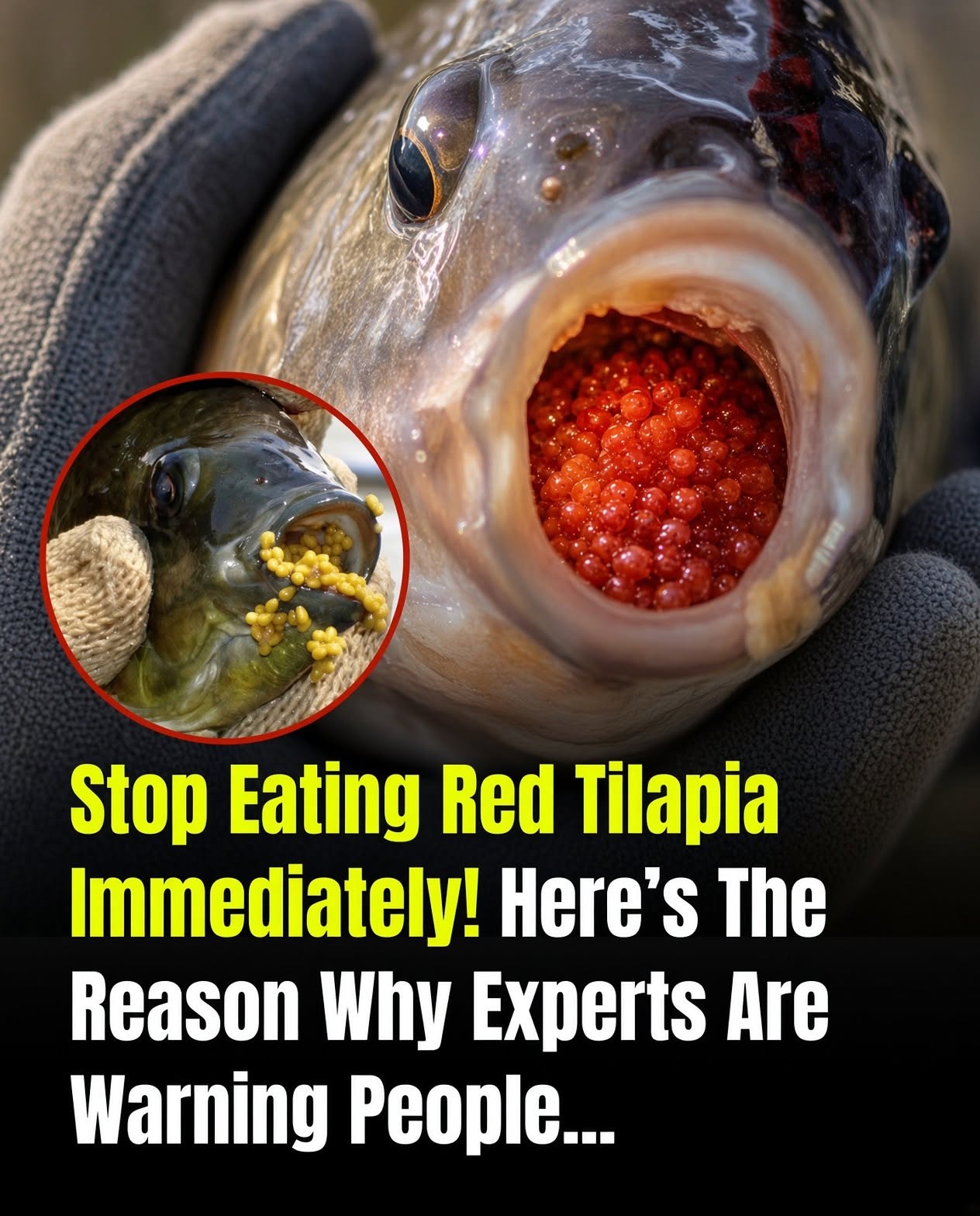
it is farmed, transported, stored, and prepared before reaching consumers.
Why Some People Are Concerned About Red Tilapia
Tilapia raised in polluted or poorly managed environments may potentially be exposed to:
- contaminated water,
- harmful bacteria,
- certain environmental contaminants,
- or inappropriate chemical use.
In poorly regulated fish farms, unsafe feeding practices and poor water conditions may increase food safety concerns, particularly when contamination is present.
Improperly handled seafood in general may also carry risks related to:
- parasites,
- bacterial contamination,
- or residues from substances used during production.
However, these concerns are not
There’s more to discover. Continue to the next page for the rest of this article.