This is an important misconception.
You might think, Well, if the lobster is boiled or steamed, surely anything dangerous is cooked away.
Unfortunately, that’s not necessarily the case.
The FDA has stated that cooking does not eliminate PSP toxins in lobster tomalley.
That’s why simply cooking the lobster longer isn’t a reliable way to make tomalley safe.
If you’re preparing lobster at home, the simplest approach is to enjoy the meat and leave the tomalley behind.
Why Does Lobster Tomalley Matter for Food Safety?
The reason comes down to the organ’s job.
Because the hepatopancreas is involved in processing nutrients and substances from the lobster’s environment, it can also accumulate certain contaminants.
Maine’s health authorities describe tomalley as functioning like the lobster’s liver and note that it can accumulate contaminants found in the environment.
That makes it very different from simply eating a piece of lobster muscle.
And there’s another issue: marine biotoxins.
Certain algae can produce toxins that enter the marine food chain. These toxins can accumulate in seafood, and some can cause serious illness.
What Does Tomalley Taste Like?
If you’ve heard people describe tomalley as a delicacy, you may be wondering what all the fuss is about.
People who have eaten it often describe the flavor as:
- Rich
- Strongly savory
- Briny
- Buttery
- Concentrated
- More intensely “lobster-like” than the meat
The texture is usually much softer than lobster meat.
It can be creamy, paste-like, or slightly grainy.
But taste is subjective—and given the food-safety recommendations surrounding tomalley, there’s really no reason to try it simply out of curiosity.
What Should You Do If You Find Green Stuff Inside Your Lobster?
Don’t panic!
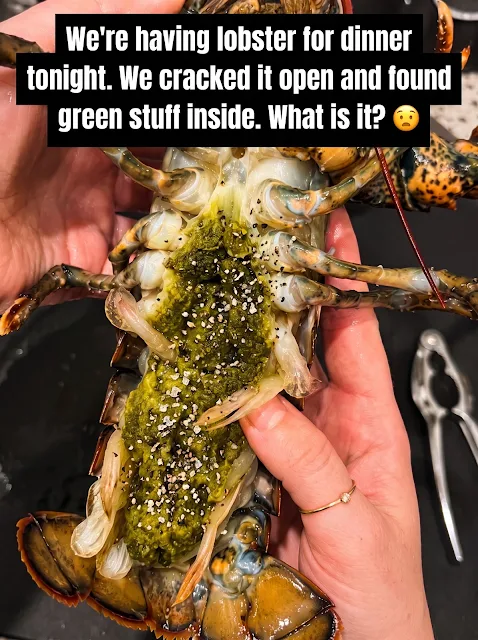
If you’ve opened a cooked lobster and found green material inside, you’ve almost certainly encountered tomalley.
Here’s the simple approach:
- Remove the lobster meat you intend to eat.
- Avoid eating the green tomalley.
- Discard the tomalley with the shell or food waste.
- Continue enjoying the lobster meat if it has been properly handled and cooked.
No dramatic kitchen emergency required!
Does the Green Color Mean the Lobster Is Spoiled?
Not necessarily.
The green color of tomalley is not, by itself, an indication of spoilage.
Tomalley is naturally greenish because it is an organ with a different composition from the lobster’s muscle meat.
However, the overall lobster should still be evaluated for freshness and safe handling.
If lobster meat has an unpleasant sour, ammonia-like, or otherwise abnormal odor, or if the seafood has been improperly refrigerated, that’s a completely different issue.
When in doubt about seafood freshness, don’t taste it to find out.
What About Black, Brown, or Unusual Material?
Not everything inside a lobster is going to look appetizing!
Lobsters contain several internal structures, and their colors can vary.
Tomalley is typically green to greenish-brown, but you shouldn’t use color alone to decide whether seafood is safe.
If something looks dramatically abnormal, smells bad, or you’re uncertain about what you’re seeing, the safest option is to leave it uneaten.
And if you’re dealing with lobster harvested recreationally, always pay attention to local shellfish closures and biotoxin advisories.
Can You Eat the Lobster Meat After Removing the Tomalley?
Generally, the food-safety guidance distinguishes the lobster muscle meat from the tomalley.
The FDA’s guidance specifically notes that lobster meat is typically unaffected even when PSP toxins are found at concerning levels in tomalley.
That said, seafood safety still depends on where the lobster came from, whether the harvesting area was open, and whether the lobster was properly stored and cooked.
If a local health authority has issued a seafood closure or warning, follow that advice.
Why Is Lobster Meat Red When Cooked?
Here’s another little lobster mystery!
Raw lobster doesn’t look like the bright red creature you see on a dinner plate.
The familiar red shell develops during cooking because heat changes the appearance of pigments in the shell.
Meanwhile, the edible meat becomes opaque and pale.
That’s why opening a cooked lobster can reveal such a funny collection of colors—bright red shell, pale meat, orange material, and that mysterious green tomalley tucked inside.
It looks almost like a tiny seafood treasure chest!
Is Lobster Tomalley the Same as “Lobster Liver”?
You’ll sometimes hear tomalley casually called lobster liver, although technically the organ is the hepatopancreas.
The nickname makes sense because it performs some functions associated with the liver, but it also has digestive functions associated with the pancreas.
So “lobster liver” is a useful informal description, but hepatopancreas is the more precise biological term.
Frequently Asked Questions
Is the green stuff in lobster poop?
No.
That common guess is incorrect.
The green material is the lobster’s tomalley, or hepatopancreas—an internal organ involved in digestion and nutrient processing.
Is lobster tomalley edible?
Although some people traditionally eat it, health authorities advise consumers not to eat lobster tomalley because it can accumulate contaminants and marine toxins.
Can cooking make tomalley safe?
Not necessarily. Cooking does not reliably destroy certain toxins, including PSP toxins that may occur in tomalley.
Is green lobster meat safe?
Green material inside the body cavity is generally tomalley rather than lobster muscle meat. Remove and discard the tomalley rather than assuming the green material is edible lobster meat.
Why does my lobster have so much green stuff?
The amount of tomalley can vary naturally from lobster to lobster.
Can lobster tomalley make you sick?
It can, particularly if contaminated with marine biotoxins. PSP poisoning can cause symptoms such as nausea, vomiting, numbness or tingling, loss of coordination, and in severe cases respiratory paralysis.
What should I do if I accidentally ate some tomalley?
Don’t panic, but pay attention to any symptoms and check whether a seafood advisory applies to the lobster’s harvest area. If you develop concerning symptoms—especially numbness, weakness, difficulty breathing, severe vomiting, or loss of coordination—seek urgent medical attention.
The Bottom Line on Lobster’s Green Goodies
So there you have it—the strange green mystery hiding inside your lobster finally has a name!
It’s tomalley, the lobster’s hepatopancreas.
It isn’t spoiled meat. It isn’t something that appeared because you cooked the lobster incorrectly. And it certainly isn’t some bizarre mystery substance that shouldn’t be there.
It’s a completely normal part of the lobster’s anatomy.
But here’s the important takeaway: natural doesn’t automatically mean safe to eat.
Because lobster tomalley can accumulate environmental contaminants and marine biotoxins, health authorities advise against eating it. The safest way to enjoy your lobster is to stick with the delicious meat and leave the green stuff behind.
And honestly?
Once you know what that mysterious green blob actually is, the next lobster dinner becomes a lot less mysterious!
Love Seafood Mysteries?
If you’re fascinated by the strange, surprising things we find in everyday foods, don’t stop with lobster!
You might also enjoy exploring:
- Why crab “mustard” looks yellow and orange
- What those strange black lines inside shrimp really are
- Why cooked shrimp turn pink
- What the white stuff on salmon means
- Why oysters sometimes contain green or orange colors
- What makes lobster shells turn bright red when cooked
There are so many little food mysteries hiding right under our noses—and sometimes, the answer is much more interesting than the mystery itself!
Did You Learn Something New?
Have you ever opened a lobster and wondered about that green substance?
I’d love to hear about it!
Leave a comment with your lobster questions, experiences, or family food traditions. And if this article finally solved the mystery for you, share it on Pinterest so another curious seafood lover can discover what that green stuff really is.
A Quick Food-Safety Reminder
Seafood safety can depend on where the animal was harvested and whether local waters are under a contamination or biotoxin advisory.
If you’re harvesting lobster yourself, always check current local rules and closures before eating your catch. Maine’s current guidance, for example, specifically recommends avoiding lobster tomalley.
And when buying lobster, choose seafood from reputable, approved sources and keep it properly refrigerated or frozen.
Because when it comes to seafood, a little curiosity is wonderful—but a little caution is even better!
There’s more to discover. Continue to the next page for the rest of this article.